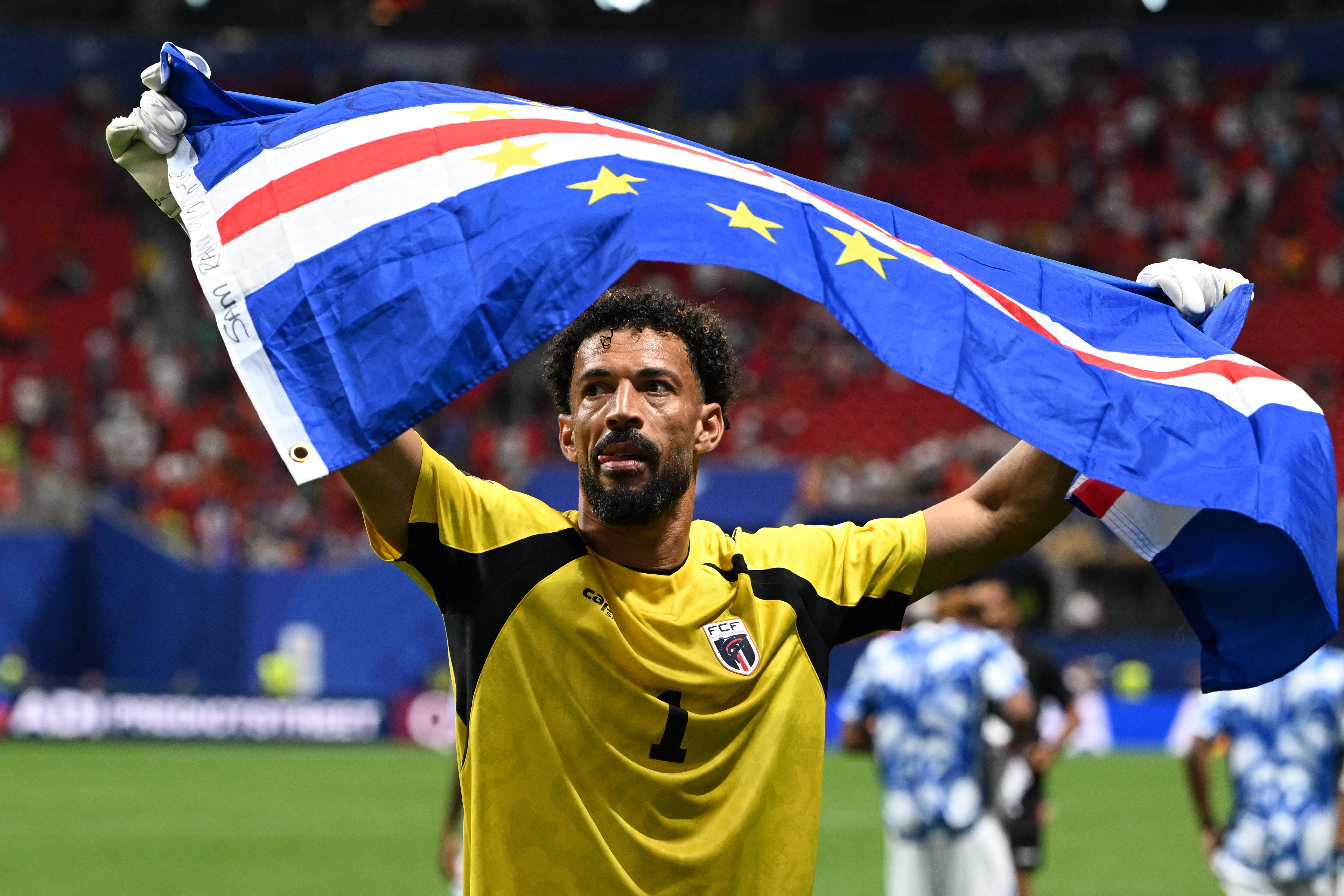
EXCLUSIVE: Joel Robles on FA Cup win, Simeone, Betis success & Roberto Martinez
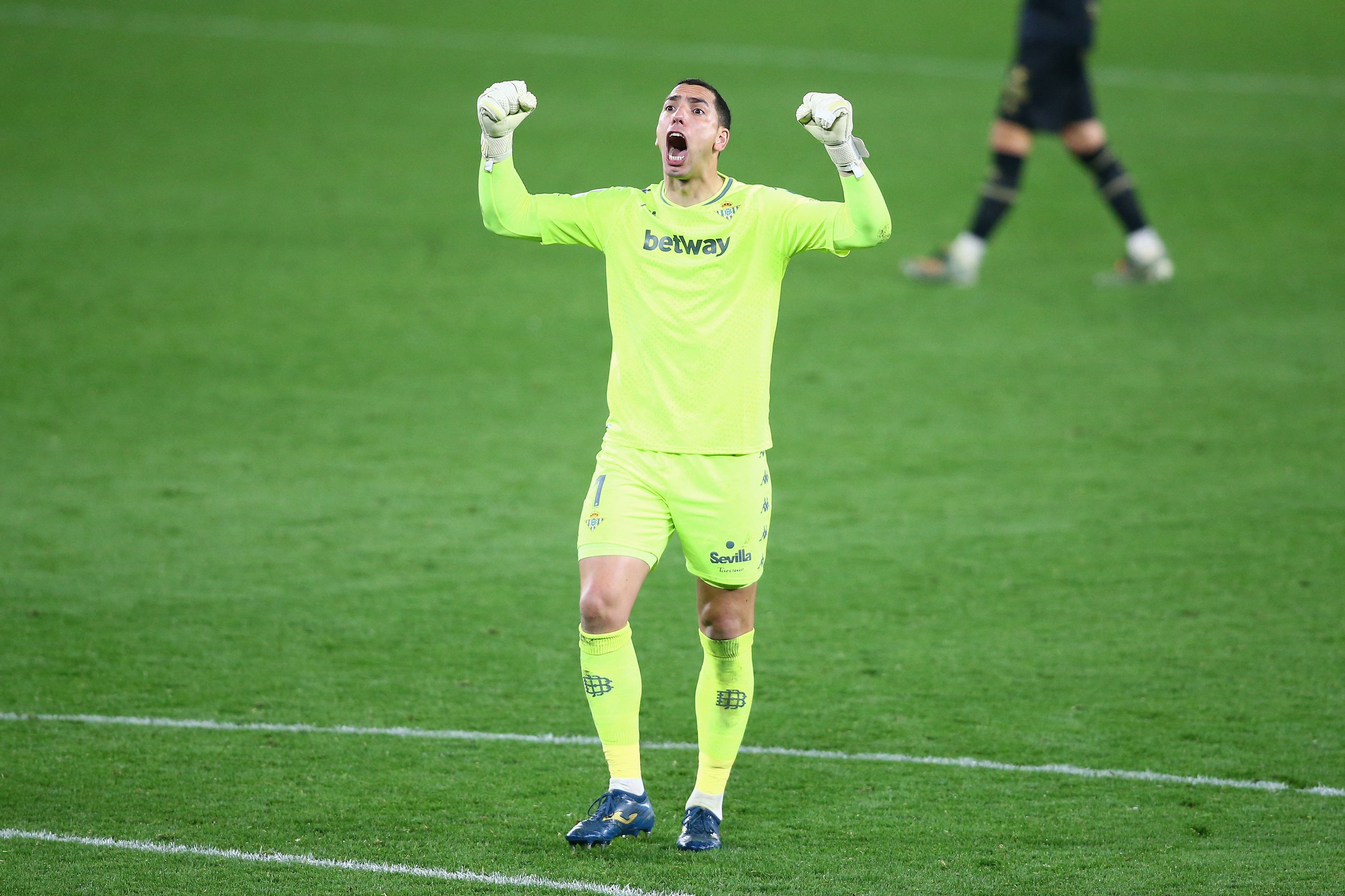
Currently playing for Estoril in Portugal, Robles sat down for a wide-ranging interview with Flashscore's Oliver Dominguez, discussing his time at some of Spain's biggest clubs, as well as his spells in England and Portugal.
Joel, you came through the ranks at Atletico Madrid and were part of the team that won the club's first Europa League title, beating Fulham in the final in 2010 and sharing the dressing room with players like Diego Forlan and Sergio Aguero. How do you remember those days?
"Imagine, as a youth academy player, being able to experience such wonderful moments with the first team and winning trophies, especially at a time when the club really needed it for its future growth. Those are moments you'll always carry with you for the rest of your life."
You also started in several qualifying rounds of the club's second Europa League win in 2012, although you finished the year at Rayo Vallecano. Do you also feel that title is a little bit yours?
"It's a strange feeling. Obviously, for a homegrown player like me, who still belonged to the club and had been there for 10 or 11 years at that point, it was a great joy. Even though I went on loan in January to Rayo, I played, as you said, the Europa League qualifiers that year in pre-season, which is when they were usually played, and it left me with a strange feeling. But the most important thing is that Atletico Madrid won that Europa League, and that's what matters most."
[h2]'Simeone still has the same or even more energy'[/h2]And that year, you shared the dressing room with two icons who, many years later, are still going strong: Thibaut Courtois and Diego Simeone. What do you think of them?
"I think I've been lucky to work alongside goalkeepers like (David) De Gea and Courtois at Atletico Madrid, and also others like (Sergio) Asenjo and Roberto Jimenez. I've been fortunate to learn from all of them. I was younger than Asenjo and Roberto, and De Gea is from my generation - we grew up together. Then I played with Courtois, who came on loan from Chelsea to Atletico Madrid, and he's a bit younger. I've been lucky to play with them, and they've all shown a high level throughout their careers.
"As for Cholo, I only had him for a short time, because it was in two spells: one was the three months before I left for Rayo, and then another three or four months before I left again, this time for England. So, in the six or seven months I was with him, you could already see from day one what he was going to bring to the club at that crucial moment.
"I think it was a radical change overnight, and you can see it now, 14 or 15 years later, Cholo Simeone still has the same or even more energy, with everything he's achieved and the tough titles he's won going up against Madrid and Barca, who we all know are always a step above. He's made Atletico Madrid a competitive team that never gives up, as you saw in the recent derby, which ended in victory. I have no doubt that the biggest reason for all this is the energy Cholo Simeone brings to Atletico Madrid."
[infobox id="0e8bad0a-7630-46a8-afe3-fa090b228a06" /]What do you think of Atletico Madrid this season?
"I see, obviously, a much more demanding club because of the profile of players they've brought in and the money they've spent. So I think they're at a point where they're trying to find themselves as a championship team, which obviously doesn't happen overnight.
"In the end, building a championship team takes time, players, good chemistry between them, and many other things. There's a lot of work behind it. You've seen it at PSG. They've spent a lot of money for many years, and it took a lot of work before they finally achieved it, and the arrival of Luis Enrique helped.
"I think it's the same at Atletico Madrid, and they're getting closer to achieving these things: reaching more Champions League finals, winning them, competing with Madrid and Barca, even though Atletico has already beaten them several times in direct matchups. So I think they're getting closer, despite how tough it is to face these kinds of teams."
[h2]Copa del Rey: 'I get goosebumps thinking about it'[/h2]Let's talk about your time at Real Betis - what was it like to win a Copa del Rey for the green-and-white half of Seville?
"I get goosebumps just thinking about it. For me, it was the best gift I could have received in my entire football career, because my contract was ending and I spent four seasons there, during which I was very happy. Of course, there were tough moments and very good ones, but for me, winning that final was the best gift football, and Betis could have given me.
On top of that, it was in Seville, at La Cartuja, with our fans, and the way we won it - with a penalty, Joaquin involved, Miranda too, both academy players. It felt like destiny for all of us. Remembering that moment is just incredible.
"Now, we're seeing a Betis that keeps growing, that's in the Champions League, and that's also thanks to the work of the board, who have done an outstanding job over the last five or six years."
So you're optimistic about Betis this year, having already beaten Madrid and won in the Champions League?
"It's been a good start, but the seasons are long, there are a lot of matches, and the Champions League will take its toll, because obviously there will be very tough opponents. They have to go to Dortmund, play against Bayern Munich, and against Arsenal.
"Those are really tough games, and that's going to wear them down, but I think they've built a competitive squad to fight in all three competitions, because you can't forget about the Copa either. And then, as Manuel always says, the most important thing is the league, because now the minimum expectation every year is to qualify for Europe."
What has Manuel Pellegrini done well and what does he mean to Betis?
"Stability. Stability and results. There's nothing more to say. I think what Manuel has achieved, very few coaches have done in Betis' history. It was a time when Betis wasn't doing well financially, but thanks to that stability of being in Europe, they've been able to keep a lot of players, build a competitive squad, qualify for the Champions League, and have a fanbase that's much more involved, which I think is one of the pillars of the team and the club.
"So I think Betis is on the perfect path to achieve even more, and that's thanks to the work Manuel Pellegrini is doing."
What was it like sharing a dressing room with Joaquin?
"It's just like everyone sees. In the end, he was a funny guy, but let's not forget Joaquin the footballer. At 40 years old, Joaquin could still leave teammates on the ground. He had so much to offer and was super competitive - he hated losing small-sided games; he hated not playing every Sunday. He accepted his role at times, of course, but he was a 40-year-old with the same ambition as when he was 25.
"Joaquin was a key figure at the club and one of the few players who could decide what to do at Betis, choose what he wanted, and always make things happen. And I think he deserved it. He's still linked to the club in another role, and I'm sure he'll do well because he knows and loves the club so much."
[h2]Winning the FA Cup with Wigan, playing for Everton & Leeds[/h2]In England, you were part of what, along with Leicester's Premier League title, is one of the biggest shocks in English football this century: Wigan Athletic's FA Cup win in 2013. How do you remember that team and that time?
"With thanks to Roberto Martinez, the coach, who gave me the chance to go to the Premier League. My first spell was at Wigan. It's a shame we got relegated, but that year we made history. I think it will be remembered forever, because it's possible Wigan may never win the FA Cup again. You never know in football, but we know it's not easy to win another title with Wigan.
"And we did it against a great Manchester City, with Kun Aguero, (Carlos) Tevez, and we were a humble team. That Wigan team that won the FA Cup will go down in history. Imagine that. I think it's a memory that will stay with Wigan fans, all of us players, and the staff for life."
Doing well in one competition and then struggling in another just days later is something we've seen before. What changes when you approach one competition or another? Or what do players feel when they go from playing one competition to another in just three days?
"It happened to us - you look at the league table, things get complicated; we were near the bottom, but in the Cup we were playing well and advancing. We had some great matches. Beating Everton away 0-3 in the quarter-finals. Then we got Millwall, who were in the second division, in the semi-finals. Well, you also need a bit of luck with the draw, because as Wigan, it's not the same to face Millwall in the semis as Manchester United, who were in the other semi. So it felt like it was meant to be.
"I remember it was a strange feeling, because we played the final one weekend and then on Wednesday we had to play Arsenal at the Emirates to avoid relegation, and we had to win. And Arsenal at that time were fighting for Champions League qualification, so it was extremely tough.
"We didn't manage to win in the league, and that's when we went down. Going from the high of winning the FA Cup against Manchester City to relegation three days later was strange. But over time, you look back on those moments, and it's a shame, and I'll always remember it - I still have that thorn in my side about relegation, but at the same time, making history and winning the FA Cup will be remembered by many people."
You mentioned Everton, where you went next and became the starter. How do you remember those days on the blue side of Liverpool?
"I was really happy. That was also thanks to Roberto, because as soon as Roberto Martinez signed for Everton, he called me, because I had one year left on my contract at Atletico, and Everton bought me because Roberto wanted me.
"Obviously, the first years weren't easy - I had to compete with Tim Howard, who was a great goalkeeper, a club legend, and was at a high level, especially in the early years, so I had to work hard and be patient until I got my chance. I tried to make the most of it, and then in my third year Roberto was sacked, Ronald Koeman came in, and I had to fight again until my last year, the fifth, when they offered me a new contract, but I decided not to renew because I needed a change, and that's when I joined Betis."
How did you feel when Koeman arrived and benched you?
"It's true that Ronald Koeman had a very good quality - he was the kind of guy who would call you up to his office and tell you things straight. He didn't beat around the bush. I remember Koeman arrived in the second week and told me, 'You're going to be number two; I'm going to go with Stekelenburg', the great Dutch goalkeeper who Iniesta scored against in the 2010 World Cup final.
"And I told him what I thought at the time. I accepted the role, worked hard, and ended up playing quite a few games that season, until my last year, when, before the season ended, he told me they were going to sign a new number one, so we had a conversation about leaving in the summer.
"That's when they signed Jordan Pickford, the young England international from Sunderland, who's shown a great level both at Everton and with England. That was my last year at Everton - Koeman was sacked in December, and I stuck it out for the rest of the year, and that's when I finished there."
Your last spell in English football, at least so far, was at Leeds United. What do you remember about that Lilywhites team? And what did it mean for you to be one of the more experienced players in that squad?
"When I arrived, I already knew what to expect. There were a lot of Spaniards - Marc Roca, Junior Firpo, Diego Llorente, Rodrigo Moreno - and that was going to help a lot, although I already knew England and adapting there was never a problem for me, but I knew there were young players.
"Also, Victor Orta, who was the sporting director, and Marcos Abad, the goalkeeping coach, made my role very clear from the start. Illan Meslier, the French goalkeeper who's now Arsenal's third keeper, was showing a great level for his age. And through hard work and rolling up my sleeves, I ended up playing that season, at a tough time, because we had to fight to avoid relegation, and in the end we couldn't do it as the last 10 games got really tough for us."
[h2]'Roberto Martinez has something special'[/h2]You mentioned Roberto Martinez a few times. What do you think of him as a manager?
"Well, he's been like half my career, and above all, he gave me the chance to play in the Premier League. We've kept in touch - now I've just come to Portugal, I've been here three seasons, and he was national team coach, but I have no doubt he's a top coach who will end up at a big club, for sure.
"Even though in recent years he's preferred to coach national teams, he'll end up at a big club achieving great things, even though in Portugal he's already won a title against Spain and is very well recognised. But I have no doubt he'll be a successful coach at club level, for sure."
Could you see that he would reach big clubs or national teams back in your early days together?
"When he was at Wigan and moved to Everton, he was already highly regarded. Obviously, I can't speak about Roberto Martinez as a coach now, because I haven't been in the dressing room with him, but I'm sure that with so many years of experience and having been in the dressing rooms he's been in, like the Belgian and Portuguese national teams, he's learned a lot. I'm sure of it.
"And besides, Roberto has something special; he has a winning aura, he's super intelligent and has everything under control, and I'm sure he'll do well in the football world. I'm 100% sure of it."
Now, moving on to Portugal and the present, how do you assess your tough start to the season for Estoril?
"When Ignacio, the president, who's Spanish, suggested I come here, I obviously had an idea of what to expect, but also the ambition they showed me was one of the reasons I came to the Portuguese league. So, it's true that we're going through a tough time right now and the defeat the other day hurt us a bit, but now, luckily, we have a long three-week break, which will definitely help us clear our minds and work on what we want for the next phase of the league."
If you had to highlight something, what has surprised you most about Estoril and Portuguese football?
"Well, I think there are some very good players in the Portuguese league, and many competitive teams, even if they're not big names, because, for example, Casa Pia - many people don't even know what that is - or even Estoril. So for me, there are a lot of competitive, tough teams and very good players, which is why the Portuguese league is based on bringing in a lot of young players to sell them later."
What keeps a veteran player motivated after so many years of success to try a new adventure in Portugal?
"Mainly, speaking for myself, I just love football, and I enjoy it. I still wake up every morning eager to train. I really enjoy the moments before matches; I love winning, but defeats and mistakes still hurt. I want to keep improving as a goalkeeper because I have a lot to work on. That's what keeps me mentally alive.
"And obviously, football today is very demanding, and you have to take care of yourself physically. Plus, I'm already 36. My competitors for the position are 22. So you have to be in top physical shape so they don't take your spot."
You have seven Spaniards at Estoril, and more and more Portuguese teams are looking to Spanish players, especially young ones. Why is this, do you think?
"I think Spanish players are highly valued abroad, and in Spain I think you have to do a bit more than usual to earn respect. But Spanish players have quality and are highly valued. In the Portuguese league, I think proximity has a lot to do with it. And then, as I said, it's a league that relies a lot on sales, on young players, giving them opportunities in the top division to sell them later. I think this league is a great market."
Spain produces a lot of goalkeepers who are great with their feet. Do you think that makes Spanish goalkeepers stand out internationally, and does it come from the training they get today?
"Yes, of course. We have great Spanish goalkeeping coaches all over the world. In the Spanish national team, there's Unai Simon, David Raya, Joan Garcia… De Gea was there too. All these goalkeepers, over time, have had to adapt and have become better in this aspect.
"For example, Unai Simon isn't the same goalkeeper for his club on Sunday as he is for the national team. Athletic has never been a club that plays out from the back much - it's more about duels and direct play - but he can turn up on Wednesday with the national team, play against England, and be able to find the third man. So that shows the ability and high level of goalkeepers today."
Notizie correlate
Worry for Man Utd as Fernandes picks up injury on Portugal duty, out of Norway clash
Belgium boss Van Bommel relishing 'special' clash with Zidane's France
Los Angeles FC sack head coach Marc Dos Santos